
Athens 1896 Olympic Games
The Athens Olympic Games in 1896 were the first of the modern era.
Home > Athens > History and Archaeology > Olympic Games > Centre > Athens 1896 Olympic Games
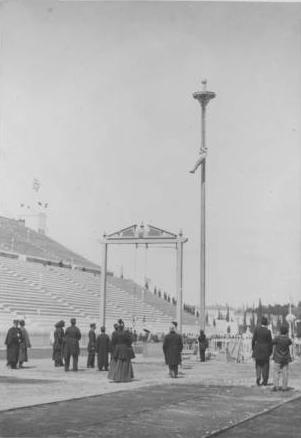
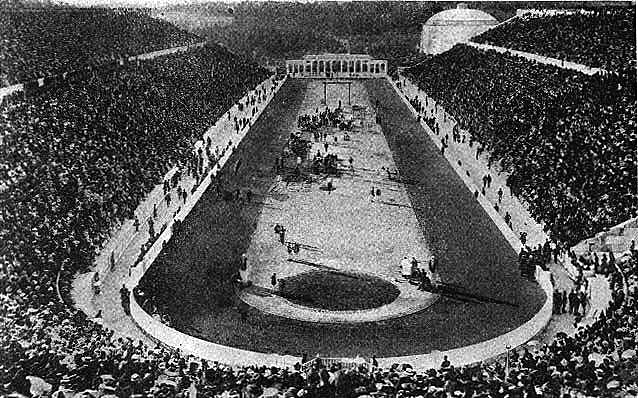
What I can see
It is no exaggeration to say that the 1896 Olympic Games were the event that changed the international image of Athens, from a “dead” city of the past, to a vibrant cosmopolitan new capital. The games were crowned with success, despite the enormous economic problems of Greece at that time. Thanks to sponsorships from wealthy Greeks in Greece and the diaspora, with the biggest donor being Georgios Averof, the largest sporting event in the world was now a fact. All organizational matters were handled exclusively by Greece, as -at that time- national Olympic committees and their operating framework did not yet exist. This is also when the first Olympic stamps issuance was carried out, in order to cover the costs of the event, a practice that is followed to this day by the organizing cities. This was also the time when the global symbol of the games, the 5 Olympic rings, was born.
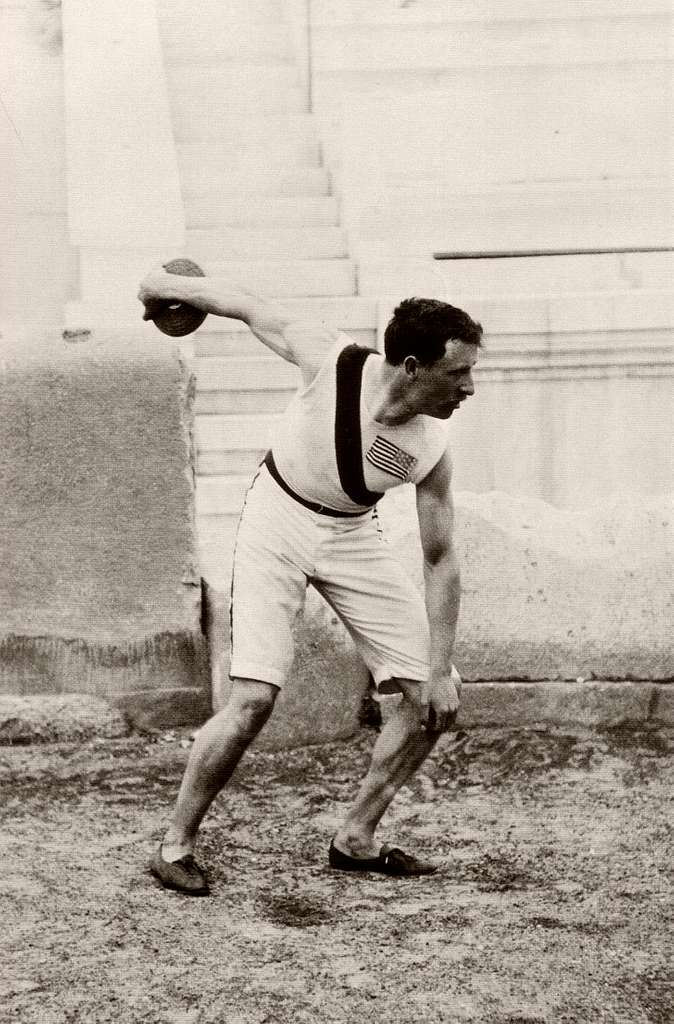
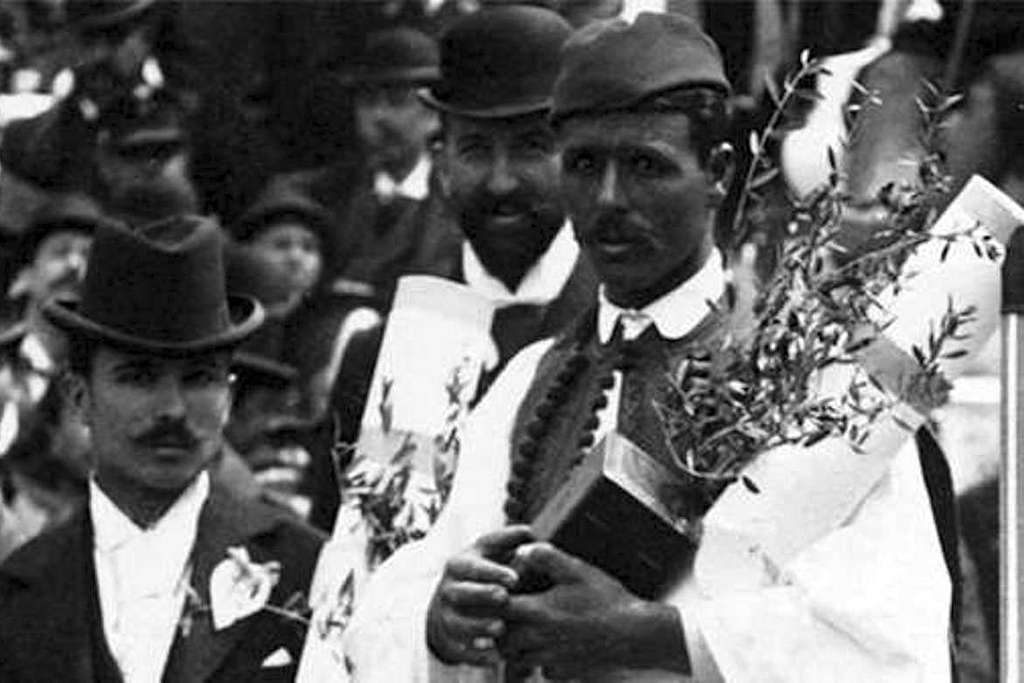
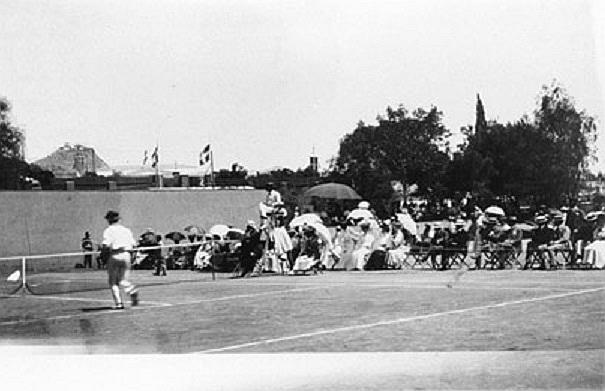
Officially, 13 countries participated: the USA, Australia, Austria, Bulgaria, France, Germany, Denmark, Switzerland, Greece, Great Britain, Hungary, Sweden and Chile. Cyprus and Italy participated informally. At that time, the games were very different from these days. There was no gold medal, but the winner received a diploma (designed by Nikolaos Gyzis), a silver medal and an olive branch wreath. Second winners received a diploma and a bronze medal, while each athlete received a commemorative medal, designed by Nikiphoros Lytras. The medal award ceremonies took place on the last day as a single event, before the closing ceremony. Furthermore, the strict terms and conditions for participation in the games that are in effect today, were not in force then. For instance, a tourist who happened to be in Athens could also participate, such as the Englishman John Boland who won in tennis. Nor could the level of the athletes be compared to modern day athletes, as the level of their preparation was that of an amateur. The American Thomas Curtis wrote in his article that the US athletes, exhausted by the ship journey, were forced to walk, were accompanied by a music band and attended all the official courtesies in Greek, while drinking local wine, even though they were about to compete the next day.
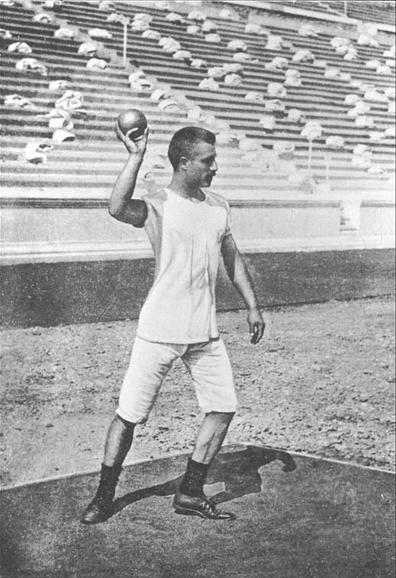
Although the actual number of athletes remains unclear, it was probably 311 and they were all men. The co-founder of the modern Olympic Games, Baron Pierre de Coubertin, was totally opposed to the participation of women. Track and field, wrestling, weightlifting, gymnastics, cycling, swimming, fencing, shooting, tennis and marathon were held. Attendance at tennis was low, as it was not yet a popular sport. The swimming events were held with difficulty due to bad weather. The United States came first in gold medals, while Greece came first in total amount of medals.
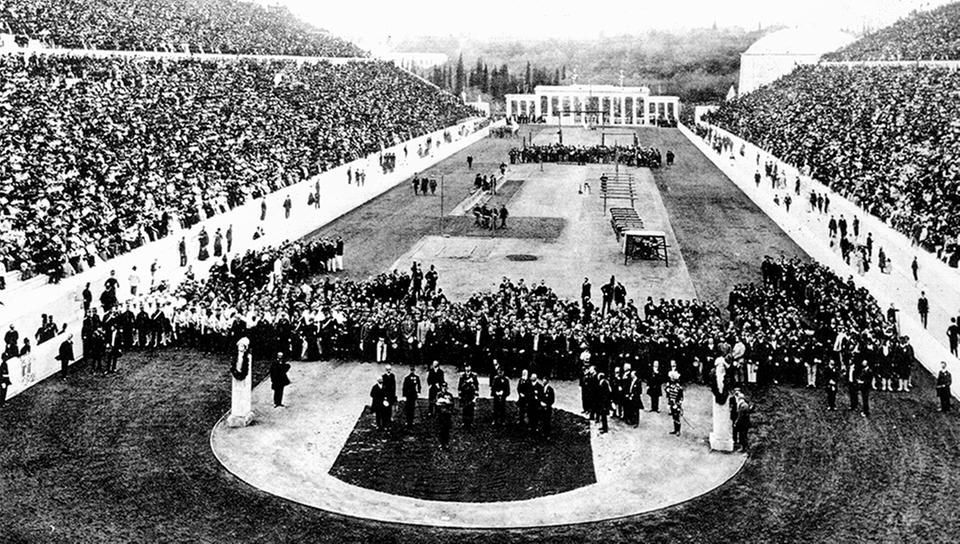
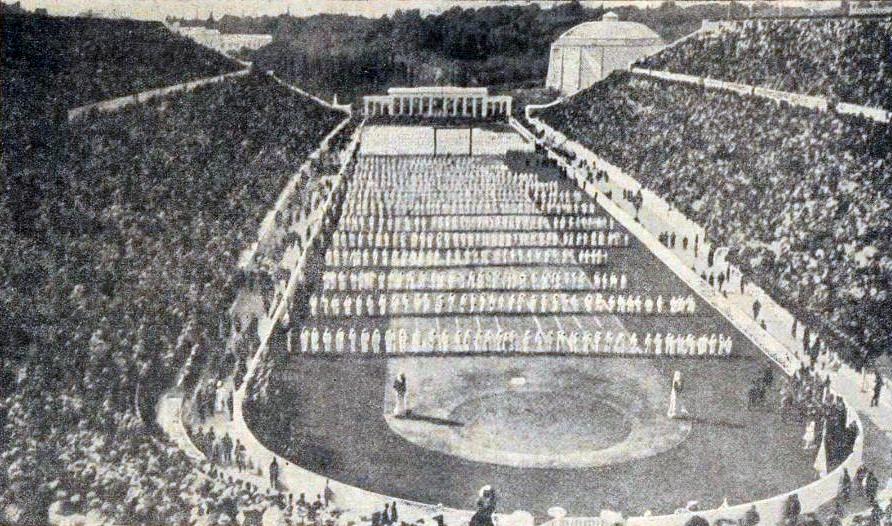
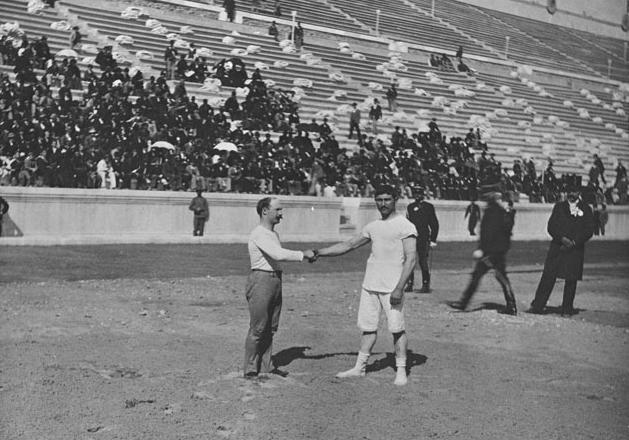
The black and white historical photographs, along with detailed descriptions from the days of the games, take us back in time. The games began with the unveiling of the statue of Averof, next to the Panathenaic Stadium. The opening ceremony took place under heavy rain and the city’s mountains were covered in snow. Nevertheless, the atmosphere in the stadium was festive. Upon the arrival of the royal family, Crown Prince Constantine delivered a ceremonial speech and King George I declared the games open, saying: “I declare the opening of the first International Olympic Games in Athens. Long live the nation! Long live the Greek people!”. At that moment, the Olympic Anthem, written by Kostis Palamas and composed by Spyros Samaras, was heard for the first time at an international event. The spectators liked the anthem so much that demanded encore. Ceremonial elements, such as the playing of the national anthem, the Olympic anthem and the raising of the winner’s flag, began here in 1896 and laid the foundations of the ceremonial Olympic protocol as we know it today.
The first event was the 100m race, won by the American Francis Lane, and in the final of the same event, the winner was also the American Thomas Burke. The winner of the long jump, James Connolly, was also from the USA. The heir to the throne and president of the Hellenic Olympic Committee, Constantine, did not speak English well and when he went to congratulate Connolly on his victory in triple jump, he told him “that was a terrible jump, well done!”.
Connolly shared a special drink with the Greek athletes, a stimulant made with cocaine leaf extract, a precursor to Coca Cola. For the 100th anniversary of the games in 1996, the competing cities were Athens and Atlanta, with the latter winning, a fact for which the Greeks blamed Atlanta-based Coca Cola, the oldest sponsor of the Olympics.
Back in the 1896 games, the athletes with the most victories in different sports were the Germans Herman Weingärtner and Carl Schuhmann in gymnastics, track and field events and weightlifting. In the first marathon as a sport in world history, the winner was the Greek water seller Spyridon Louis. The general picture was that the Germans were better at gymnastics, the French at cycling, the English at tennis, and the Greeks at marathon, shooting, and fencing. If we could summarize the highlights of the days, a) on the 3rd day, the shooting range in Kallithea area was inaugurated by Queen Olga, who fired the first shot, b) concerts by philharmonic orchestras were held everywhere in the city and in general, there was a very festive atmosphere, c) the victory of Spyridon Louis in the marathon – disputed by some modern scholars – caused enormous enthusiasm among the Greeks and the Athenians threw an all-night party, while many offered him valuable gifts, d) on the evening of the 7th day, the great torch relay took place, e) the bad weather on the 8th day swept away boats and barges, resulting in the swimming events in Piraeus being held with difficulty and the postponement of the rowing event, f) women were not allowed to participate in the marathon, but Stamata Revithi from Syros island, thinking that she would receive prize money, ran the route alone the next day of the marathon and her time was recorded by the race officials g) the bad weather on the 9th day forced the organizers to postpone the awards ceremony for the next day. The notable facts of those days were also that there was no incident of violence; tickets were sold in many areas in the city, including cafes, shops and tobacco shops, while betting was prohibited. The city’s cleanliness improved, shopkeepers were persuaded to tidy up their shops, as was the case with the residents for their houses. New roads were opened and old ones were improved. The water supply system was also improved, central squares were decorated and theatrical performances were staged. Hotels were not sufficient for that amount of visitors, therefore, many Athenians adapted the spaces of their houses -often including warehouses-, for short-term rental.
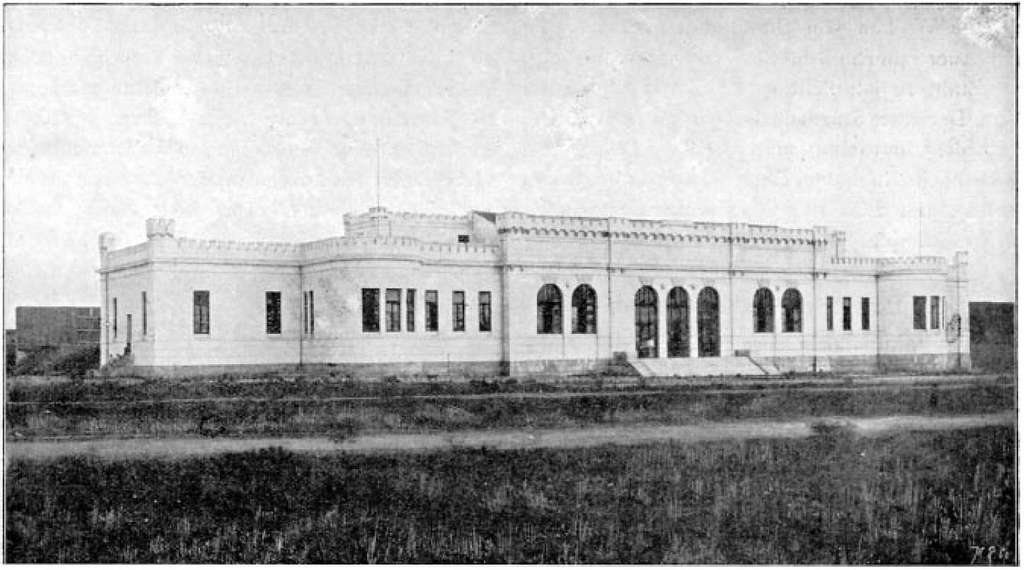
It is estimated that 60,000 visitors arrived, a large number for the time and especially since the Athens population was only 100,000. The stadium could not be full every day. The Olympic Games began to acquire characteristics of more massive amounts of spectators from 1932 onwards. The main facilities were the Panathenaic Stadium and the Zappeion Hall, which was used as Olympic Village, where the athletes could accommodate. The fencing matches were also held there. The tennis matches were held in a specially constructed area next to the Temple of Olympian Zeus. The cycling track (about 8000 spectators and a 333m track) was located in Faliro area, the shooting range in Kallithea area and the swimming matches were held in Passalimani. The water was quite cold (12-14C) and the pumpkins were not very stable as buoys. Spectators used public transportation such as carriages, carts and the steam-powered Athens-Piraeus Railway. Events that were not held due to financial limitations, despite their approval at the Paris Congress, were the equestrian games, cricket, jeu de paume, pentathlon and ice skating.
In addition to the facilities, other public works contributed to the undisturbed organizing of the games, such as greenery and street lighting, the Ilissos Bridge connecting the Panathenaic Stadium with the city, the construction of urinals and the upgrading of services. All these, of course, led to significantly more expensive goods and services.
The games ended with two celebrations, one in the palace ballroom in honour of the athletes and the organizers of the games and one in the Panathenaic Stadium, which was attended by the royal family, followed by the playing of the Greek national anthem and a Pindaric ode, which the British George Stuart Robertson wrote exclusively for the occasion. Then, the athletes entered, with the first being the Greek team and Spyros Louis, then the teams of the USA and Hungary, and then the rest. After the Olympic anthem was played, the king declared the games closed.
A few days after the athletes had left Athens, the body of former Prime Minister Charilaos Trikoupis arrived in the city. Athens, from being the host city of a global celebration, underwent a sudden change of mood, paying tribute to its deceased.
The global impressions of the daring endavour to organize and host the Olympic Games were positive. The French nationalist and spectator of the games, Charles Maurras, had come to Athens with a judgmental attitude, mainly fearing that the cosmopolitan character of the games would alter the racial purity of the nation. The term cosmopolitanism had a negative meaning at that time. Nevertheless, he was fascinated by the formality, the references to tradition and the interesting contrasts. He was struck by the fact that the Greek public cheered almost wildly when the athletes were Greek, but there was never any injustice with the foreign winners. The Greeks always cheered the winners wherever they came from. Taking into account the similar attitude of foreign teams and their fans, he therefore concluded that the idea of the nation and cosmopolitanism can coexist, saying that the “false cosmopolitanism of the stadium not only does not stifle national enthusiasm, but stimulates it to the point of despair”.
The impact of the games on the city was also positive. Areas around the facilities and around the railway stations were developed. A few years later, the first car was introduced and the first road, Aeolou Street, was paved with asphalt. In just 2 years, the dirt roads were gone, while a new municipal hospital, vegetable market and squares were built, cafes opened and trade flourished.
The next Olympic Games were held in Paris in 1900 and were combined with the Paris World Fair. In 1906, the so-called Mesolympics or 1906 Intercaleted Games was held in Athens and was never officially recognized, despite being the most successful event after the problematic events of Paris and Saint Louis (1904) and despite the participation of 20 countries in 77 sports, the participation of 877 athletes, 7 women and the inclusion of football as an Olympic sport. It was an attempt to permanently hold the games in Greece and an event that elevated Olympism, since the Greeks already had the know-how. It attracted thousands of visitors and important infrastructure projects were carried out thanks to its organizing. Visitors spoke of days of “magic and dreams” in Athens, which was full of cultural events and decorations.
What I can't see
Ancient Greek civilization, as well as the ancient Olympic Games, had been objects of admiration in Renaissance Europe and the centuries that followed. Many travelers came to Greece to admire the ancient ruins. The independent Greek state of the 19th century followed the same path, turning its gaze to the ancient past. In this context, the precursors of the Olympic Games had already appeared in Greece and abroad. The first attempt at modern sports was at the Cotswold Olympic Games in northern England in the 17th century, by Robert Dover, an event that lasted until the 19th century. Other attempts at local Olympic Games were in Cambridge, Wenlock in England, Ramlösa in Sweden, New York, Montreal, Grenoble/Rondeau, London, Birmingham and the German revival of Turnfests. In Greece, the first attempt to revive the games was made in 1838 by the Municipality of Letrina (modern Pyrgos town, near Ancient Olympia). The municipality proposed the establishment of modern Olympic Games every 4 years in Pyrgos.
This proposal was never implemented there, but the first processes took place in 1856 in Athens, which had already been declared the capital of the newly established Greek state. These processes were related to the first sponsors, such as Evangelis Zappas and the initiative of the Minister of Foreign Affairs and archaeologist Alexandros Rizos Ragavis for the Olympia event. Olympia or Zappeian Games (also called National Olympic Games) were exhibitions of mainly agro-industrial products, within the framework of which athletic competitions were also held. Olympia events were held in 1859, 1870, 1875 and 1888 and took place in the newly built Zappeion Hall and the Panathenaic Stadium. The First Olympia was a total failure. At the Second Olympia (1870), things were much better, while the athletes’ oath was established and the Olympic anthem was heard for the first time. However, an outcry broke out, with the philosophy professor Filippos Ioannou being the main proponent, who railed against the games because “workers” participated. He proposed that only students should participate in subsequent events, in order to ensure that the games remained a privilege of the bourgeoisie, as was the case in England. With the death of Zappas, the Olympia events declined and were finally discontinued. This end was the beginning of modern Olympic Games, as we roughly know them today. Moreover, a year before the Athens Olympics, the Tinia games were held, the first Panhellenic athletic games on Tinos island.
The idea of reviving the Olympic Games had already been expressed by the Greek enlightener Adamantios Korais, long before the Greek Revolution. The French Charles-Pierre Frédy Baron de Coubertin (1863-1937), however, is officially considered the father of the modern Olympic Games, who promoted school sports and, in collaboration with the British William Penny Brookes and the organizing committee of the Athens Olympia events, held the first local Olympic Games in England. This event prompted Coubertin to systematically promote the idea of revival, following the standards of the ancient games. In addition, Coubertin studied in depth the educational system in England and the USA, which he visited. This study helped him to set the foundation of a major task, such as the organizing of the Olympic Games. Thus, a few years later, at the Paris Sports Congress, the representatives of many countries accepted his proposals and those of his Greek collaborator and first president of the International Olympic Committee, Dimitrios Vikelas, and it was decided the games to take place every 4 years in a different city, with Athens being the first. Nonetheless, according to scholar David Young and his well-documented work, Coubertin simply reproduced the ideas of the British Brookes, the French Philippe Daryl and many personalities in Greece, but he promoted them more effectively.
Everyone congratulated Coubertin for his idea, but no one supported him in practice. Everyone had characterized his proposals as romantic and utopian, but he did not give up. He made contacts in Europe and the USA, where amateur sports were promoted. The popularity of these sporting events was growing, especially among the upper classes. He took advantage of this momentum to familiarize people with the idea of the Olympic Games, through a more professional logic of sports and with specific and inviolable rules. Famous private schools and universities, such as Cambridge and Oxford, contributed to the better organizing of popular sports and local competitions. Schools and colleges in the United States later followed the same path. The development of sports culture in Greece was contributed by the Panhellenic Gymnastic Association and specifically by Ioannis Fokianos, whose influence tended to reduce the popular character of sports as open celebrations for all and cultivated the idea that athletes should be high school and university students.
The growing popularity slowly turned local competitions to supra-local. Despite the enthusiasm of the Greeks for the organizing of the first Olympic Games, politicians of Greece were not as enthusiastic, as they believed that sports did not contribute anything to the development of the country and its industry. It was also a time when Greece was on the verge of bankruptcy. In 1893, the Prime Minister of Greece declared bankruptcy. For this reason, Coubertin and Vikelas turned to Greek private individuals, whom they initially failed to convince. In case these efforts ultimately kept being futile, Budapest would host the games. Ordinary citizens, small businessmen and people from working class were on the side of Coubertin and Vikelas. Also, the palace, with the support of the opposition -led by Theodoros Deligiannis-, which later became the government, bypassed the Trikoupis government and ultimately, Prince Constantine took over as president of the organizing committee, who addressed Georgios Averof and at the same time held a fundraiser, during which the astronomical – for the time – amount of 330,000 drachmas was collected.
Securing funding did not end the problems. Coubertin had to attract countries, as enthusiasm was very low, find solutions for the foreign athletes’ arrival, for the medals design, for the establishment of rules and much more.
Coubertin and the Greek organizers knew the power of symbols. The importance of the “Resurrection” of Athens and Ancient Greece was linked to the timing of the start of the games, which was on March 25 (according to the old calendar – established as the official date of the beginning of the Greek Revolution) on the day of the celebration of 75 years of independence and the day on which Catholic and Orthodox Easter coincided, a religious aspect of the “Resurrection”.
The international press of the time emphasized the connection between the sporting events of the games and the stadium and antiquity, a connection that inspired the audience and made the games more prestigious. They conveyed the festive atmosphere in the stadium, especially after the victory of Spyridon Louis, the victories of the athletes of their countries and the impressions they gave. They also covered the backstage of the games, social commentaries by prominent personalities and gossips of the games. They also recorded their impressions of the imposing stadium, analyzed the risk of the project of reviving the Olympic Games (often with a critical attitude), the difference with other sporting events and the different atmosphere created. The international press did not fail to criticize many athletes, especially those from the British Commonwealth, because most of them participated for their personal pleasure and not for representing their country or a sports club. The only exceptions were the American and Hungarian athletes who had a more organized delegation. On the other hand, the international press came to a common conclusion. These games were a unique experience. The meeting of the whole world in one place, the hearing of so many different languages, and the meeting of different cultures was something that captivated everyone, an experience that the Greeks were called upon to organize and they did so successfully.
The marathon race was first established in memory of the messenger Pheidippides (490 BC), who ran to Athens to bring the news of the Greek victory over the Persians after the Battle of Marathon. This is probably the legendary version of the story. The marathon was probably inspired by the return of the Athenians from Marathon to Athens after their victory. Whatever the source of inspiration, the marathon sport was a global innovation and was loved throughout history, which is why it is still held in many cities around the world every year.
In the meantime, a quarrel had broken out between the Germans and Coubertin and by extension, between the German and Greek press. German athletes defied the threats of the German Gymnastics Association that asked from them not to participate in the games. The problem was resolved through the mediation of the monarchs.
The success of the games whetted the appetite of the Greeks for their permanent holding in Greece, and Prince Constantine openly expressed this desire. The American athletes agreed with him and their support was also expressed with a letter, in which they stated that the games should be held in the place of their birth. The Greek press sided with the palace and suddenly began to taunt Coubertin and Vikelas. Vikelas was torn between his friend (Coubertin) and his feelings for Greece. Due to this development, a cruel power game began, with insults on both sides and Coubertin became very angry with the Greeks, because his name after the games was rarely written in the press. While Coubertin had this demand, he himself had never previously made such references to persons and ideas that he presented as his own. This entire negative climate had serious repercussions on the IOC (based in Lausanne, Switzerland since 1915), the Olympic movement as a whole, the reputation of the games and of course, the Olympiads that followed. The climate began to reverse with the Athens Mesolympics and the London Olympics in 1908, even though the reality in the following years left indelible marks on world history, the First and Second World Wars. Although there were periods when this was not achieved, the aim of the games is to unite peoples and for sport to be the means of world peace, as was the case with the ancient Olympic truce.
The issue of permanently hosting the Olympic Games in Greece arose again in 1976, when many African countries refused to participate in the Montreal Olympics, due to the participation of South Africa, which was under Apartheid. The then Greek Prime Minister Konstantinos Karamanlis seized the opportunity and brought the proposal back. He did the same in 1980 at the Moscow Olympics, on the occasion of the USSR’s invasion in Afghanistan. Karamanlis’ proposal was rejected based on 3 arguments: 1. Coubertin envisioned the games to be held all over the world, 2. It is unfair for athletes from some countries to permanently change time zones, 3. Greece did not have guaranteed political stability at the time, especially when, after the fall of the dictatorship, a referendum was held to abolish the monarchy, while the former King Constantine ΙΙ was a member of the IOC. However, the argument about political instability in Greece was later de facto refuted.
The athletes’ performances at the 1896 Olympic Games may have been mediocre, but emotion, fair play, cooperation or – even if temporary – brotherhood of peoples and hospitality triumphed, and all this took place against the backdrop of the genuine landscape of antiquity, the ruins of classical antiquity and the values that were born from it. Greece showed that it can set goals and achieve them, even with adversity. The director of the American School, Richardson, said “it is a small and poor kingdom, but like ancient Greece, great in spiritual gifts”.
In a turbulent era, Greece highlighted the way it envisioned itself and its role in the modern era. The emotional references to the ancient glorious past largely nourished the excessive self-confidence of the Greeks and nationalism, which was the dominant international trend of the time and also nourished the Great Idea (recovery of the borders of the Byzantine Empire, starting with Istanbul, the elimination of Turkiye and the solidification of Greek hegemony in the region), which a few decades later would prove disastrous. Alongside this nationalist frenzy, the situation was being partially balanced by a remarkable trend of internationalization, as imposed by the new way of life after the Industrial Revolution and in particular, by scientific development, the development of direct means of communication (e.g. telegraph, telephone) and international commercial, cultural and industrial exhibitions. The Olympic Games seemed to have smoothly integrated into the logic of both of these conflicting trends, which shows that the circumstances were perfect for such a global event.
Bibliography
Mavromataki M., (2002), Ολυμπία και Ολυμπιακοί Αγώνες, από την αρχαιότητα μέχρι σήμερα, [Olympia and the Olympic Games, from antiquity to the present day], General Secretariat of Sports
Kourela Ι., (2003), Ολυμπιακοί Αγώνες, από την Αθήνα του 1896 στην Αθήνα του 2004, [Olympic Games, from Athens 1896 to Athens 2004], Papazisi Publications
Kyriakou Z., (2003), Ολυμπιακοί Αγώνες, η γέννηση, η αναβίωση, η επιστροφή, [Olympic Games, the birth, the revival, the return], Dimosiografiki Epitheorisi, Taxideftis
Sotiropoulos V., (d.u.), Θρυλικοί Ολυμπιονίκες, [Legendary Olympians], Alfeios Publications
Trova E., Skouris P., (2004), οι Πρώτοι Ολυμπιακοί Αγώνες της Ευρώπης, [The First Olympic Games of Europe], Metamesonykties Publications
Mallon B., Widlund T., (2009), The 1896 Olympic Games, results for all competitors in all events with commentary, Mc Farland & Company, Inc., Publishers
Smith L.M., (2004), Οι Ολυμπιακοί Αγώνες του 1896 στην Αθήνα, η γέννηση των σύγχρονων Ολυμπιακών Αγώνων, [Olympics in Athens 1896: the invention of modern Olympic Games], Estia Bookstore
Ross F.L.J. (2004), Ολυμπιακοί Αγώνες, επιστροφή στην κοιτίδα, [Olympic Games, return to the cradle] Explorer
Location
Timeline
Modern and Contemporary era (1821 - )
1896 The games began on March 25 and were completed 9 days later.
1936 The lighting of the Olympic flame in Ancient Olympia before the the games is an idea that was initiated by the German Carl Diem.

Share